
Featured

How to Create an Evergreen Educational Video for Your Business

Evergreen material is a great entry point to video content that you can start at any time. It is timeless content, which is great from a reuse and repurposing perspective, but also when you’re getting started, you don’t want to produce videos that will be out of date within a matter of weeks. The early days of video marketing are ones where businesses and brands are getting a feel for how the medium and process of making it works for them, and it’s handy to be able to do that whilst creating content that you’ll be able to get a lot of mileage from.

So… how can you create an evergreen educational video for your business?

1. Pick a topic

Before you can start work on creating a video, you need to know what it is going to be about. This helps you to make something with a clear message that calls out to your audience without losing focus.

A good place to start is to think about what questions are people asking in relation to your industry. If you don’t know any off of the top of your head, sites such as Answer The Public are a great place to start. They collate the most commonly searched questions connected to whatever keywords you input, which you can export and save as a point of reference whenever you’re in need of inspiration for future content.

2. Research your chosen topic and write a script

Not all video content requires a script – in fact, some forms are better when they are formed completely off-the-cuff. However, in this instance, a good script will form the basis of your video, ensuring that it remains focused on the information your audience is after, and delivers it in a concise manner.

A smart tip to bear in mind is to always keep the scripts to your videos handy. They will save you a lot of time and effort should you decide to add captions to your video, but with a little bit of formatting, it is super easy to transform a script into a blog post as well, meaning you get double the amount of content you initially set out to create with relatively little extra work.

3. Pick a location and start filming

Another great advantage of evergreen videos is that they are very simple to shoot. The absolute minimum you have to do is set up in a nice spot in your office or workspace that is clear of distractions and not subject to too much noise. It’s beneficial to have a tidy space around you too, and this will prevent your viewers from having their attention drawn away from you, the subject of your video.

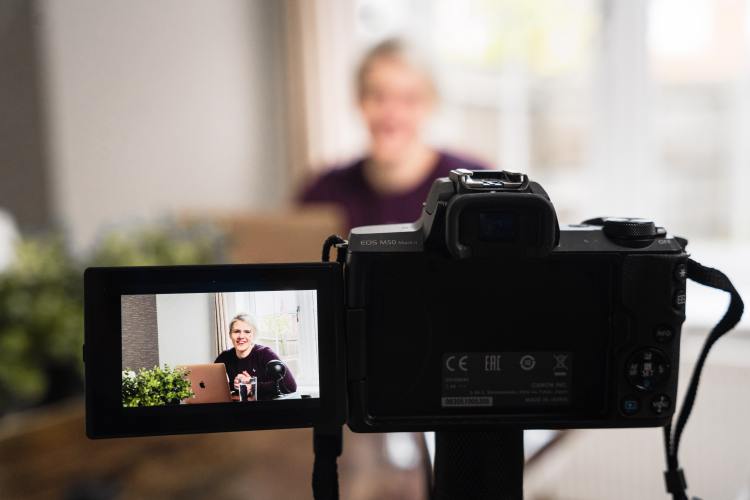
With your filming spot picked out and ready to go, just set up your camera (this could be an actual camera, but there is absolutely nothing wrong with filming on your mobile phone  given the high-quality, 4K recording capabilities many are equipped with today) and start filming! Work your way through your script in your own time, and don’t worry if you need a few takes to get through the whole thing – like with anything, it will become more natural the more you practise it.

4. Edit your video

If you can believe it, filming a video is the easy part for most people. Post-production can be a more time-consuming process, but in it’s most basic form, all you’ll need to do to edit your video is to trim out everything but the best takes of your script so that what you’re left with is a clean, concise run-through of your message.

As far as software is concerned, there are a lot of options available, with free programmes such as Movie Maker and iMovie that come built-in to a lot of desktop devices, all the way up to professional-grade software such as Adobe Premiere Pro and the rest of the Creative Cloud suite. Choosing the right video editing software is a whole other topic in itself, but a good rule of thumb is simply find what works for you. Make things as easy on yourself as possible whilst you’re getting started as it will mean you’re more likely to form a habit that you will stick too. Once you have that baseline established, then you can start to explore other, more advanced avenues.

5. Add your finishing touches

Once you have the main body of your video pieced together, there are just a couple of other things you need to do for a more professional finish. These don’t need to be massive, especially if you’re putting the whole project together yourself, but little things like adding your branding to the video, and placing a music bed underneath will elevate it massively.

6. Publishing and promoting your video

With your video now ready, it’s time to show it to the world! This is a good time to revert back to the stage in the first step of this process where you identified who you’re making your video for, as this will help you to choose the first place where you should publish it. Remember – it’s important to post and share your content where your audience will see it, so make sure you’re in-tune with their online habits.

It’s not a bad idea to have your video feature somewhere on your website as well, perhaps embedded in a blog post on a related topic. This is great from an SEO perspective, as video helps to keep people on web pages for longer, so will be really beneficial to your website when it comes to search engines. 

Featured

The Benefits of Using Video Content for Business, and Some of the Challenges You Should Consider When Devising Your Video Marketing Strategy

Video content possesses many benefits for brands and businesses when used as a marketing tool. It can reach wider audiences and generate greater revenues thanks to its engaging, dynamic nature. 

Despite the obvious advantages, however, making videos relevant to your audience and putting them out into the world can be a daunting prospect. Video production seems like a lot to take on, especially for marketers and business owners who plan on undertaking the task themselves. 

The good thing is the positives are overwhelming, and the challenges that may arise are manageable provided you anticipate and prepare for them.

BENEFIT: Video content massively improves your brand’s online presence

SEO and social media platforms both place huge emphasis on video. Whether a web page features a video or not has a direct impact on search engine rankings, with Google actively prioritising pages that do contain videos over those that don’t. The reason for this is that video content keeps people on web pages for longer, making the page more valuable in terms of information and user experience.

Social media is also becoming more focused on video. More platforms are emerging which are dedicated to video content first and foremost, with other channels such as Facebook and Instagram making video more of a priority within their existing framework.

CHALLENGE TO CONSIDER: Consistency

As with all forms of content marketing, consistency is key. With video, because the process of creation can seem like such a sizeable undertaking, a lot of people can get put off before they’ve even started, whilst others try to work towards unrealistic goals and become discouraged when they don’t achieve what they set out to.

There are a lot of things that could prevent brands from showing up with consistent video content – time, ideas and confidence are just a few. The secret to combatting any challenges relating to consistency is having a strategy that works towards realistic, achievable goals; something that will keep you focused on your end-game whilst anticipating anything that might crop up so that you can work on a solution to overcome it.

BENEFIT: Video content is easily repurposed

Part of the solution to tackling consistency-related challenges is planning and having content ready to go ahead of time. Whilst it’s tempting to want every piece of content you put out there to be 100% original, it a lot of work to undertake. There is absolutely nothing wrong with repurposing content, and video lends itself to this practise very nicely.

Long-form videos can be chopped and trimmed into smaller, more bitesized chunks that you can repost across social channels; key points can be extracted and converted in animated graphics through sites such as Canva, and you can take transcripts of videos and turn them into blog posts – something that is an even greater idea when you consider that some people still prefer text over videos, so that they can consume information at their own pace. 

This repurposing value also makes the promotion of videos much easier, as the materials lie within the content that you’re already creating

CHALLENGE TO CONSIDER: Time and budget

Video production can be perceived as being expensive when businesses are looking to outsource, but it is worth considering what the real cost of doing it yourself could be – especially if creating video content is a new venture for you and your business. Making a video can be a time-consuming process from start to finish, and the hours can very easily wrack up if you fail to plan effectively.

However, even with a fail-safe strategy in place, you need to think about what the initial investment that acquiring new tools and software and learning how to use them could entail. DIY video production is a good thing! But these are just some points to bear in mind before you take the plunge to be sure that your video marketing strategy suits you.

BENEFIT: Decision makers watch video

Whatever your chosen method for creating your brand’s video content is, it is best to view whatever time and money is required as an investment, because that is exactly what it is. Video is watched by the people who make decisions. 75% of managers watch content related to their work every week, and 54% of senior executives share the videos they see with their colleagues. These are people who spend a lot of time staring at text on pages and words on screens – video is some welcome respite!

Pair this with the knowledge that some industries are so convinced that they are not suited to video that, for the most part, they simply don’t use it at all, it’s not hard to find gaps just begging to be filled. Educating and providing value suits every industry, and these are principles that are well-suited to video, which gives you a perfect opportunity to stand out.

CHALLENGE TO CONSIDER: Not sure where to start

Video content is a big subject to get your head wrapped around, and when you’re approaching it for the first time it can be difficult to know where to get started. In the beginning, treat it like you would any other marketing endeavour – identify your ideal clients and the problems they have that you can solve, but instead of diving straight into a big promotional campaign for your products and services, think about what information you can provide that will help your audience to educate and help themselves.

This kind of evergreen, value-added content is great for businesses and brands to put themselves out into the world. It gets people – your audience – used to you showing up, and starts to work on that ‘know, like, trust’ element that builds relationships and will eventually lead to conversions.

However, it is also worth noting that action inspires action, and if getting started with video marketing was the biggest obstacle you needed to overcome in order to actually get the content out there, videos that showcase your knowledge and expertise about topics within your industry really are the best way to get going.

Featured

How to Create a Video Marketing Strategy for Your Business

Video content is an important marketing tool for businesses. With 79% of marketers who aren’t already using video planning on making a start this year, more and more people are being turned onto the promotional value that video holds. Of course, like with any new undertaking, it can be very easy to get distracted by shiny pennies and things that don’t actually serve you and your goals as a business. What you need is a video marketing strategy; a roadmap that will help you to remain focused on the reason(s) why you’re making videos, and the results that you want to achieve with them.

Creating a video marketing strategy that works for you

1. Identify your target audience

Who are your customers, or who would you like your customers to be? The idea here is to niche down as much as possible. Be precise with who it is you want to appeal to with your videos. Go as far as creating ideal client personas if you haven’t done so already; if you have, maybe revisit them to make sure they’re as up-to-date as possible.

The point of this first step is to make sure that your video content speaks directly to the audience it is intended for. Have you ever heard the saying, “By appealing to everyone, you appeal to no one”? In a time where so much is competing for people’s attention, you really have to stand out to individuals in order to stand a chance of being paid any mind. If you can create videos – or any kind of content, for that matter – that makes the person watching feel like you are speaking directly to them, you will attract the people who want to work with you, meaning any leads generated are likely to be of a far higher quality than those you would gather from more generalised messaging.

2. Make sure everyone involved has the same goals in mind

Taking a video marketing strategy from the earliest stages of creation, right up to its execution will most probably involve a number of people, all of whom will contribute something different to the process.

It is vital that everyone involved – regardless of how big or small their contribution may be – is working towards the same end-point. Too many cooks in the kitchen ruins a dish, and too many people with too many ideas of what your video marketing strategy should hope to achieve will dilute the messaging and the focus and ultimately result in it not achieving the desired outcome. Be clear on the objectives from the start to be sure that everyone is pulling in the same direction.

3. What is your timeline and budget?

Please be under no illusions here – video projects can run away with time (and, let’s face it, money) if you let them. As important as it is to be 100% clear on your goals and objectives for your strategy, it is equally as important know all deadlines in relation to achieving them. Without that clarity, your video content may not materialise is a manner timely enough to really matter, if it even materialises at all.

The best thing you can do when devising your strategy is to be transparent about how many steps are involved, plus how long each of those steps will take. Again, these intermediary deadlines will help you to maintain focus and stay on-target. Be honest about how long things might really take, especially in anticipation of any challenges you may come up against. You would be surprised at how easily your whole strategy could be derailed if you underestimate timeframes, especially if it causes you to miss a deadline early on.

4. Distribution

The key thing to consider when it comes to choosing where to post your video content is where your target audience spends most of their time. After all, there really is no point uploading to a platform that they don’t use, as they simply won’t see it.

There are other considerations to make however, and things like technical limitations and budget aside, promotion is the next thing to concern yourself with. Video content will not promote itself, but some platforms make the promotion of your videos easier than others. This is something to pay extra attention to if you’re a small business without the backing of your own in-house marketing department as potentially more of the promotional side of things will fall on someone with a more generalist skillset.

5. Are you appealing to your ideal client personas?

This is a question to constantly ask yourself throughout the process of devising your video marketing strategy. However, it is worth remembering that it isn’t just a case of appealing to your ideal clients with your messaging and content, but also making sure that that messaging and content aligns with the goal you set in place for your strategy. If the two elements deviate too much, you probably won’t hit your desired outcomes.

6. What will success look like?

When you first set your goals, you need to be aware of what metrics will be most helpful in determining whether you’re on-track to achieve them. It’s also worth spending some time researching what tools you will use to gather this data. Be wary of native analytics tools offered by social media – they may not offer long-term insights into how your strategy is performing, and can also may multi-channel analysis hard.

The best course of action is to identify a handful of key performance indicators that correspond with the goals you’ve set and use those to measure success.

Featured

What is Video Marketing? – The Importance of Using Video Content for Your Business, and 9 Types of Video You Can Use to Get Started

With every social media platform now focusing their attention on video content, it is more important than ever that businesses get behind video marketing for their brands. Fortunately, this push comes at a time when creating video content is as cost-effective and easy to do as ever; most people have the ability to film high quality, 4K video on their smartphones, placing the power of video right at their fingertips.

Why is video so important?

Video content is the second most popular content type on social media for boosting engagement. For marketers, it holds huge potential for brands to start a conversation and build interactive audiences that connect with the business on a level that goes beyond simply following them and occasionally catching a glimpse of them on their timelines. 

Of course, we all know that social media platforms get to write the playbook when it comes to what content gets prioritised, and whilst some channels such as YouTube and TikTok have always been about video, the likes of Facebook and Instagram are now placing a greater focus on video content. Why? Think about your own habits – how much time can you spend simply watching the videos that get recommended to you on your feed? Engaging video keeps people on social media for longer, which serves the platforms and the brands that use them as marketing channels extremely well.

SEO takes a similar view on video too, with web pages that feature video seen as being higher quality pages thanks to the increased time visitors spend on them thanks to video. 

How does video marketing help businesses?

Aside from how favourably it is treated by the platforms it is posted on, video content holds a lot of potential benefits for brands and businesses wanting to harness its power. For one, it is well-suited to the methods in which we are most likely to consume information today, i.e. it appeals to mobile users.

More than 75% of all videos are played on mobile devices (eMarketer). It makes sense – for the most part we don’t actively seek out most of the videos we watch; they crop up when we’re scrolling social media, or they’re shared with us via people we know, and with the in-platform video player tools available on most social media apps, it is a content type that is super accessible at all times. Pairing that potential with high-quality, engaging material is sure to get your brand in front of a wider audience.

But video isn’t just a tool for reaching new people. It can be used at all stages throughout the customer journey, from brand awareness and acquisition all the way through to retention. As a customer service device, video is a great way to educate and provide value beyond the sale of a product or service.

Types of videos you can use to kickstart video marketing for your business:

Brand videos

Brand videos typically form the launchpad for further video content for most businesses. They tend to be created as one part of a wider campaign for increased brand awareness. These videos usually introduce their products and services, as well as showcasing the missions and values of a brand in a way that will attract their target audience.

Event videos

In a similar vein to brand videos sit event videos. If you’re organising a meet-up, exhibition or out-and-out conference, an event highlights video is a really great way to give prospective attendees a feel for what it might be like ahead of buying tickets and booking their spots on the register. Sprinkling a few interviews from visitors and speakers amongst the visuals can really back up the whole, ‘you HAVE to be here,’ angle too.

Explainer videos

Sometimes, people don’t buy into a product or service simply because they don’t know they need it. Explainer videos are a good way to remedy this issue. They take an individual representative of your ideal client, and place them into a narrative where they experience all of the problems and challenges that you know your target audience faces, whilst positioning your brand and what it provides as the solution.

Animation

Explainer videos can be delivered via live-action video, or they can be animated. The beauty of animation is it enables you to demonstrate harder-to-grasp concepts that may need strong visuals to help drive home your points. Whether you’re trying to explain an abstract product or service, or are perhaps at a point where a tangible deliverable doesn’t exist in order to feature in a video, animation is a viable option.

Product demos

Product demos are some of the best-value videos you can produce from a marketing perspective as they can feature at multiple stages of your buyer’s journey. On the one hand, they are a great tool to have on landing pages where people can purchase your products, as they make a strong case for why people need said product, and already start to provide some educational value given the fact they show people how to use that product in a way that will provide them with their desired outcome.

However, they also make a very handy guide to refer back to long after the purchase has been completed. Having those kinds of videos on your website, or maybe even as part of an aftercare package upon purchase, gives people great customer service right at their fingertips whenever they may need it, empowering them to trouble-shoot basic challenges themselves.

How-to videos

Alongside product demos, you can also use how-to videos. These aren’t quite as product-specific as demo videos, but are a good way of teaching your audience something new on topics related to your business and services. They also provide people with valuable information that might be able to help them ahead of making a purchase, so that when the time comes for them to take that next step, you already have that connection where they know you as someone who has helped them.

Expert interviews

Value-added content is definitely the route you should look to go down in relation to much of your content marketing, and an educational plus very engaging way of doing this is to conduct interviews with experts. These experts could be people within your organisation who specialise in certain topics that your audience are interested in, or they could be industry thought leaders if you wanted to branch out a little.

Whatever approach you take, these types of videos will help to position you and your brand as an authority on the given topic; people will trust you as the source of information on anything to do with that subject, directly or indirectly. Plus, it’s the kind of video that invites conversation, so is really great when it comes to building an engaged audience that will shout about you to others.

Case studies, customer stories and testimonials

Almost all of the videos mentioned above will show your audience that you can talk the talk, but your most skeptical prospective customers will always question if you can walk the walk unless you can provide proof that you and your services can be the solution that you claim to be. That’s where case studies, customer stories and testimonials come in.

Nobody is more trusted during the buying process than an existing customer; someone who has been in the shoes of every other prospective client, taken the steps you’ve guided them on and seen the results. These are stories that are so valuable to have regardless of format, but when put to video they take on another dimension that forms a deeper, more authentic connection that ultimately pushes the people watching them in the direction you want them to go.

Live videos

Going live is a concept that can be a little daunting for a lot of people because it’s a real-time through-the-keyhole peep into the behind-the-scenes area of your business. But these are just a few of the reasons why it is such an effective form of video to work with. Add to that the fact that social media channels like Instagram and Facebook notify users when someone they follow is ‘live’, and it’s not hard to see why more of us should look to utilise the feature. 

Why You Need to Build Value-Added Content into Your Marketing Strategy and 5 Ways You Can Get Started

When it comes to your brand’s content and marketing strategy, it can be tempting to make it all about you. Whilst it is true that you and the products and services you provide need to feature, it’s important to note that that alone will not get people’s attention. What will do the job, however, is weaving value-added content in amongst all the more brand-focused pieces you put out into the world.

Why is value-added content important?

Value-added content provides your audience with information that they would struggle to get anywhere else. It may be entertaining, but most importantly it is popular with viewers because of the educational value it carries. They may be able to take something away from the content they’ve consumed and solve a problem they’ve been experiencing, or work out an entirely new way of doing something that is far more efficient and practical than what they’ve been doing up to now. It helps to position your brand as a voice of authority – an expert, if you will – on the wider subject matter that your content relates to, which really helps your audience get to know, like and trust you before they’ve even become a customer.

Why You Need to Build Value-Added Content into Your Marketing Strategy and 5 Ways You Can Get Started

It is super easy to build value-added content into your brand’s marketing strategy – here are a five ways you can get started:

Blog posts

An obvious starting point is blog posts not too dissimilar to the one that you are reading right now. These are a great way to directly answer the most common search queries people have – the main thing to remember is to always stay relevant to the search query you’re hoping to answer. The more focused you can be, the helpful and therefore more valuable the post will be to the reader, which in turn will be rewarded by Google. 

Videos

Video content will always be engaging. It is multi-dimensional, and with all platforms favouring video posts, views are growing rapidly. You can take very much the same approach as you would with blog posts, or even repurpose them and turn them into video essays. The beauty of the big push on video content is that it is now easier than ever before to create and distribute whatever you produce using the tools embedded in social media platforms alone, so even if you don’t have the means for professional video production, this isn’t a medium that is off-limits to you.

video content

E-books

Contrary to what popular opinion would have you believe, there is still a very real desire for long-form content. E-books and white papers are real opportunities for you to do a deep-dive on any given subject, and creating an ‘ultimate guide’ will position you as a trusted authority. They perhaps require the most research of all the methods featured in this post as they do need to be all-encompassing, but the devil is in the detail and the work will pay off. You know yourself that there is nothing better than finding a single post that answers all of your questions on a topic, so to be the person providing that value for someone else will work wonders for your brand.

Newsletters

Your audience probably won’t need the inside scoop on the minute-by-minute developments that occur within your industry as it simply won’t be relevant and could lead to information overload. However, there is no doubt that certain developments will be of interest – why not create a newsletter that curates all of the industry information that affects your audience? Lay out all of the best information in accessible points that are relevant to your readers. Applying how these developments will affect them is the key here, because it is one thing to know about the changes in isolation, but what they mean in the context of the real world will add another layer of value that will be absolutely golden.

marketing content

Webinars

Webinars are great for delivering product insights, services and research. There is no doubt that you can cover just about anything in a lot of depth with a webinar, but it is important to make sure that everything that is featured in them adds value as there is also a significant time investment required of viewers. 

Storytelling and Why it’s an Important Aspect of Video Content

Nowadays it’s a constant fight for your audience’s attention. With so much content constantly flying at them, if you don’t capture their curiosity quickly, you’ve had it. However, a method for delivering information that has stood the test of time is storytelling, which should feature as a cornerstone of your whole marketing strategy, not just your video content.

Why is storytelling so effective?

The key to any message getting through to an audience is for it to build mental and emotional connections with them. Whether the story you’re telling resonates with an individual emotionally or simply plays on their curiosity doesn’t matter – the point is to present something that is worth staying engaged with in order to see what happens next.

In a marketing sense, this is great as it provides you with a way of keeping all eyes on you and what you’re showing to the world for longer, meaning you have a greater chance of achieving your overall objectives.

Storytelling and Why it’s an Important Aspect of Video Content

Video is a fantastic medium for storytelling as it is naturally suited to it. Whilst it may be hard to build written content for your business in a way that takes the reader on the journey you want them to be on, it is remarkably easy with video, largely due to its multi-dimensional format. Everything the viewer sees and hears contributes to their experience of the story as opposed to words written on a page which can sometimes leave the reader with too much work to do themselves in order to fill in the gaps.

The key to telling a good story

Generally speaking, there are two things to bare in mind before you start work on building the narrative you want your audiences to see:

  • Show, don’t tell
  • Be worthy of their attention

If you deliver every excruciating detail of your message in the form of a voice over you will lose your viewers. Think of how you can portray the same thing in a variety of ways that people will still understand whilst remaining engaged.

A few other points to consider include:

Knowing your target audience and goals

One way or another, your business goals cannot be met without your audience. Therefore, it is essential that you know your target audience inside out – who are they and how should you interact with them? Being familiar with your audience will enable you to tailor-make narratives that appeal directly to them, and this specificity will help you to reach your goals more efficiently.

video content target audience

The narrative ingredients

If you were to pick apart any story, whether that be a classical fairytale or a modern day blockbuster, a basic formula would emerge very quickly. Typically, there is a hero, a problem (very often a person struggle), and the solution to it. Now, think of how you can work that into a piece of video content, or any form of content for that matter. Customer testimonials lend themselves wonderfully to this particular method, but with the right approach it becomes very easy to see how you can build engaging narratives with any type of video.

Choosing a format for your video content

This generally boils down to live-action video or animation. Animation may provide you with more flexibility when it comes to illustrating different concepts, however the viewer remains slightly more removed from the video so it may not carry the same emotional weight that live-action can due to the portrayal of real people that your viewers will recognise as themselves.

What’s Included in a Wedding Photography Package?

A photographer is one of the key parts of every wedding. With so many treasured memories to capture, it’s hard to imagine any nuptials taking place without one. No matter what kind of wedding day you plan on having, there is a photography package out there to suit. Whilst wedding photography does initially present itself as a significant investment – especially considering how little of the work you see as a couple – when you break down the average package, there can be no doubt that preserving the priceless memories of your big day often comes at a steal.

So what’s included in a wedding photography package?

Coverage on your wedding day

It will come as a shock to absolutely no one that the actual photography on your wedding day itself is included in whatever package you choose. The amount of coverage you want will inevitably affect the overall cost. Typically, most photographers will spend 8-10 hours taking pictures on your wedding day, capturing a variety of different shots that will work together to tell the story of how it all unfolded. 

Some packages will also offer a second shooter who will usually be around on the day for the same period as your main photographer. Most often, a secondary photographer will be offered for larger weddings, or those that may take place over a number of locations.

wedding photographer

Pre-wedding photoshoot

Something that is becoming more and more popular is the pre-wedding or engagement shoot. This is essentially a mini photography session where you as a couple can get to know your photographer, discuss ideas and generally get a feel for how things will be when the big day rolls around.

Edits

The final photos that couples see always undergo a little post-camera treatment, and this is something that is massively overlooked when people choose their wedding photographer. Obviously not every single photo taken on the day gets the Hollywood treatment – if you can believe it, it can often take an entire day narrowing down the selection to the absolute cream of the crop – but the ones that do take time. This is a large part of the work that goes on behind the scenes away from the big day itself, but is perhaps the most important in terms of giving you the collection of images you dreamed of.

wedding photography

USB stick

In this electronic age, physical photo albums don’t often come as standard in terms of how your wedding photos will be delivered to you. Like with wedding videographers, USB sticks are the preferred delivery method as they are a practical way of handing over what is often a large quantity of high resolution images in a manner that also provides a physical keepsake.

Select prints

Whilst an entire album featuring every single one of the photos taken on your wedding day may not be something that comes as standard, a very select number of prints depicting the most precious moments may be something that your photographer offers. 

Photo showreel

More and more photographers are going down the route of creating photo showreels alongside their standard gallery of pictures. So, whilst you will have an entire folder of photographs to look through on a USB, there may also be the option to have a selection of those photos compiled together in a format similar to a slideshow, set to music of your choice. This is an option that takes the memories of your wedding day as well as some of the songs that may have featured and creates a narrative that you can watch unfold again and again.

wedding photos

All of the costs that come with securing your wedding photographer in the first place

Booking your wedding photographer requires a deposit, and whilst usually non-refundable in instances where their services are no longer needed, it is included in the overall price you pay.

As well as this, your package cost also covers any expenses that may be incurred on the day unless stated otherwise, meaning outside of the time spent actually taking photos at your wedding, that price will also cover travel to and from the venue and the time it takes. 

Here’s the thing – a wedding photographer’s work doesn’t start and end on your wedding day. As mentioned at the start of this article, that is mere a scratch on the surface of what they do. 

5 Reasons You Need To Invest In A Wedding Videographer

Your wedding is a huge life milestone, and one that will never come around again. As such, it is imperative that you make the absolute most of the occasion, both on the day itself and in the lifetime that comes after it. One way to ensure this is by hiring a wedding videographer to capture the big day in all its glory so that you can relive it time and time again once the celebrations are all over.

Whilst it is another expense, booking a wedding videographer is worth it! As something that will go on to become a treasured family heirloom in the years ahead, setting aside space in your budget for video on the big day will plant so many seeds of joy that you’ll wonder why you ever questioned the need for one when they blossom down the line.

However, if you still need persuading, here are five reasons why you need to invest in a wedding videographer:

Capture all the things that your photographer can’t

Photographers have had a place at weddings for a long time, and deservedly so. They do great work to capture all of the special moments that unfold throughout the day. But that’s exactly what they are – moments. They don’t tell the whole story, whereas video does. 

wedding videographer

Your wedding videographer will capture all of the movement and sound that still photos will miss, such as the best man getting heckled by his newborn baby daughter during his speech, or that auntie whose laugh lets you know it’s her without even needing to see her.  Try as they might, that is the good stuff that photography just cannot cover, but video can, and will.

Relive the whole day, and all the emotions that come with it

By the time it reaches you, your wedding video will essentially be its own little feature film. Set to music that recreates the atmosphere of the gathering and all the people there, it really will tell the story of the day. Depending on the package you pick, you will also be able to relive large parts of the ceremony and speeches, meaning you get to experience again parts that flew by a little too quickly the first time around.

A wedding videographer will catch all the bits you miss

Your wedding day is all about you. As such, it is likely that you’ll be pulled in every direction, meeting and greeting guests, sneaking off for little romantic photoshoots and just taking moments to enjoy the day by yourselves. Of course this, plus the sheer scale of the day and how quickly it passes, means that you are bound to miss some things. Video won’t.

wedding videography

Most wedding videos are shot in a documentary style that captures so many things you didn’t see yourself on the big day, or that passed in such a blur your forgot about them. Having them to revisit afterwards, means you don’t miss out entirely, and may even get a few surprises thrown in for good measure.

Share your wedding day with those who couldn’t make it

It is inevitable that not everyone who you’d like to be a part of your wedding day will be able to be there. Whatever the reason, booking a wedding videographer to film the proceedings mean that they don’t have to miss out entirely.

Many wedding videographers use platforms such as Vimeo to deliver your video to you, meaning it is as easy as sending a link to the group chat to let people feel like they had front row seats all along.

wedding video

Watch it on repeat

As has already been mentioned a few times throughout this post, hiring a wedding videographer will give you the opportunity to relive your big day over and over again. Whilst it might not completely replace your streaming subscriptions, it will give you a special way to celebrate anniversaries, or revisit the occasion with your wedding party. What better way to commemorate the occasion than with sharing the memories with loved ones all over again?

Hiring a Professional Video Production Company vs. Doing It Yourself – What You Need to Know

Video is an essential ingredient when it comes to marketing your business. It is a form of content favoured by audiences, and this is reflected by search engines when it comes to your brand’s visibility. As such, it could be said that any kind of video is the right kind of video, and to an extent that is true. But sometimes, just because you have the capabilities to make your own videos doesn’t always mean you should. Even in the times we are in where video technology is available to all, there is still a place for professional video production alongside doing it yourself, and this article aims to break it down for you.

The cost of video

Professional video production is an investment, of that there is no doubt. Every client’s primary concern lies with what kind of video they can get with their budget, and more importantly how that video will go on to pay for itself. 

professional video production

However, video is content, and creating content takes time – time to film, time to edit, and potentially time to reshoot should things not go to plan the first time around. Time is the most valuable commodity, and outsourcing your video content to a production company frees up more of yours, and that alone is worth the financial cost incurred.

Production timeline

Anyone who has worked in corporate video production for any period of time will tell you it is an extremely fast-moving industry, and that you very rarely have weeks let alone months to prepare and execute ideas. Often video is one of the last steps when it comes to launching a product, or is needed to recap an event whilst it’s still fresh in the minds of all those concern.

Essentially, we’re talking about short deadlines, and these carry with them serious risk and added stress. However, by electing to outsource your video production, much of that is taken out of your hands and taken care of by a team of people who are used to dealing with such requirements on an almost daily basis.

commercial video content

Never underestimate the importance of quality

There will be countless times where a moment itself is greater than the way it was captured, such as with behind the scenes content. However, when it comes to videos that  are deliberate as opposed to spontaneous, and very likely to be closely linked to goals that your business has, a certain level of polish and production value has to be present, both in the filming and the editing that comes after.